

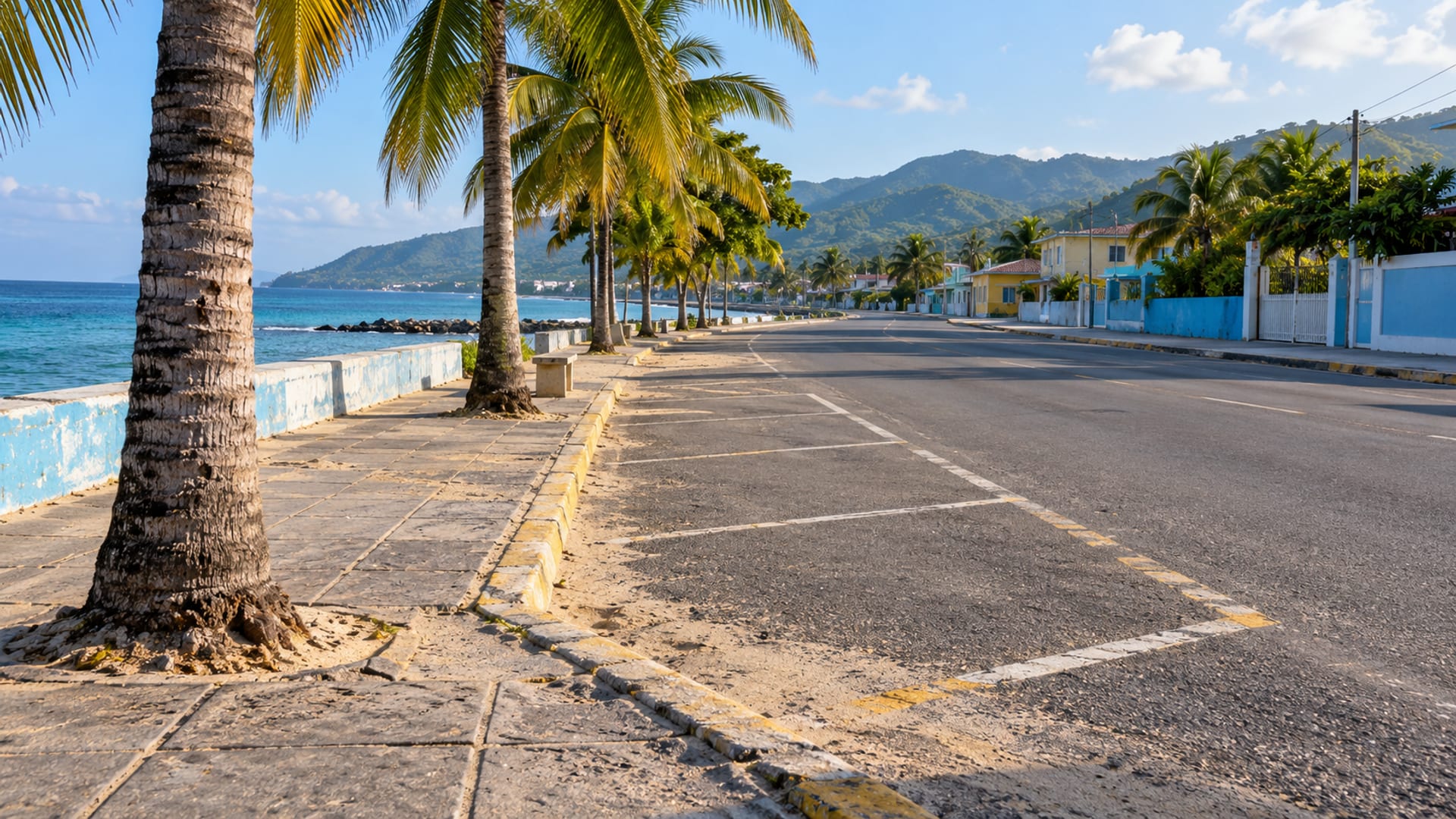
Route taxis are shared Public Passenger Vehicles that carry separate-fare passengers along approved routes. For a local trip, you usually go to a taxi stand, transport centre, bus park or recognised roadside stopping point, signal a vehicle with the correct route markings, state your destination and pay the published passenger fare. July 2026 rates were published as a base fare of J$132 plus J$8.64 per kilometre, with examples including J$240 from St. Ann’s Bay to Ocho Rios and J$190 from Eltham Park to Spanish Town. There is no booked departure: vehicles leave as they fill, and the trip time depends on the route, traffic and stops.
A route taxi can suit you when you can reach the route, identify the correct destination and accept shared seating with roadside pickups and drop-offs. A private charter, airport transfer, coach, bus or rental car fits better when you need an exact address, luggage space, a fixed pickup time or a vehicle for your group.
What a route taxi is
The Transport Authority’s licence information defines a route taxi as a Public Passenger Vehicle with no more than 10 seats. It carries passengers who pay separate fares along a designated route. The vehicle may stop at permitted points to collect or drop off passengers along that route.
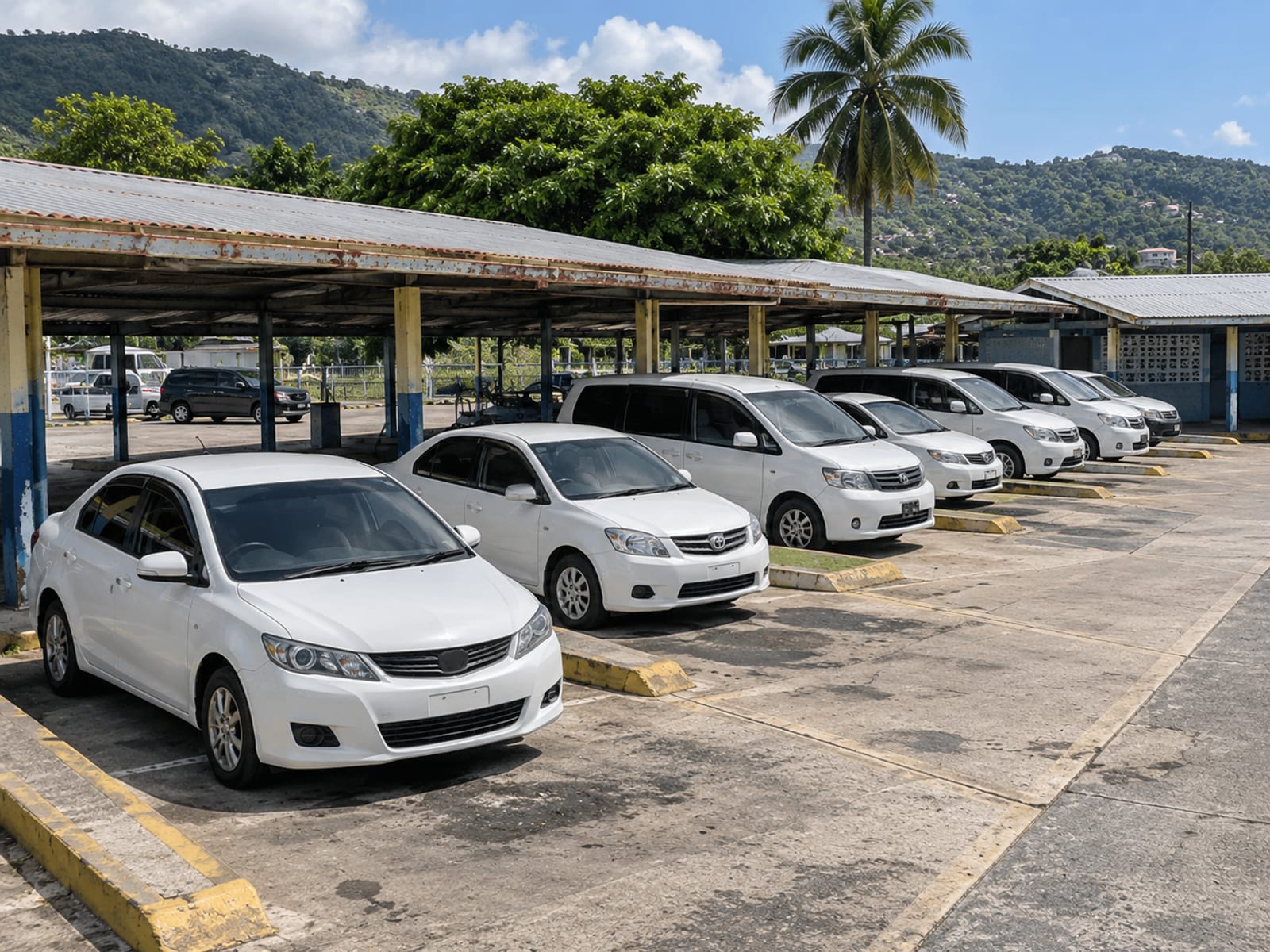
A route taxi is different from a charter or hackney carriage. A charter carries passengers travelling together under a private hire arrangement. The Transport Authority describes a contract carriage as a vehicle hired as a whole for an agreed rate. It must not stand or ply for hire in public places unless specifically permitted.
A JUTA taxi is a private or charter service associated with the Jamaica Union of Travellers Association. It is not the same licensing class as a route taxi. At Sangster International Airport, MBJ Airports Limited lists JUTA and JCAL at the airport taxi desk outside Customs.
A bus or rural stage carriage has at least 11 seats and carries separate-fare passengers stage by stage along a designated route. JUTC is the government-owned urban bus operator, while privately operated coaster buses also serve towns under Transport Authority licensing.
The Transport Authority licenses and regulates public passenger vehicles. Route taxi licence applications are processed through route taxi associations. If you are choosing between a route taxi and a private service, start with the basic question: do you need a shared vehicle travelling on an established route, or a vehicle arranged for your party alone?
If you need a bus or coach for a longer trip, JUTC Buses in Jamaica: Routes, Fares and the Montego Bay Service and Knutsford Express in Jamaica: Routes, Schedules, Fares and Booking cover those choices separately.
How to identify a route taxi
Before boarding, look at the vehicle and the driver’s identification. A route taxi should have:
- Red PPV licence plates.
- The words “Route Taxi” printed on the doors.
- The route origin and destination printed clearly on the front doors.
- A yellow roof globe marked “Taxi.”
- A black-and-white checked colour code.
- A Transport Authority driver identification card inside the vehicle.
- A Transport Authority identification badge worn by the driver.
- A PPV driver’s licence held by the driver.
- An electronic monitoring device.
The Transport Authority’s colour-coding information says the black-and-white checks should be arranged horizontally, measure 10 centimetres in height and use 2.5-centimetre squares. The vehicle should also display the required windshield documentation.
Take a moment to check the red plates, route markings, yellow taxi globe, driver identification and windshield documentation before entering. A vehicle being available for hire does not by itself show that it is licensed for public passenger service.
“Robot” is the Jamaican term for an illegally operated or unlicensed public passenger vehicle. The Transport Authority warns passengers against using illegally operated vehicles and promotes vehicles with the required markings. Jamaica Information Service reported that amendments strengthened the Transport Authority’s and police’s powers to seize unlicensed vehicles. The enforcement provisions also cover licensed vehicles operating outside their authorised routes or using the wrong licence category. JIS reported first-conviction fines of between J$20,000 and J$40,000 in its material on the amended provisions.
Where route taxis leave from
Route taxis operate along designated origin-to-destination routes. In towns, you may find them at taxi stands, transport centres, bus parks and established roadside stopping points. Half Way Tree Transport Centre in Kingston is a major interchange for bus and taxi routes; if you are waiting there, here is where to eat in Half Way Tree.
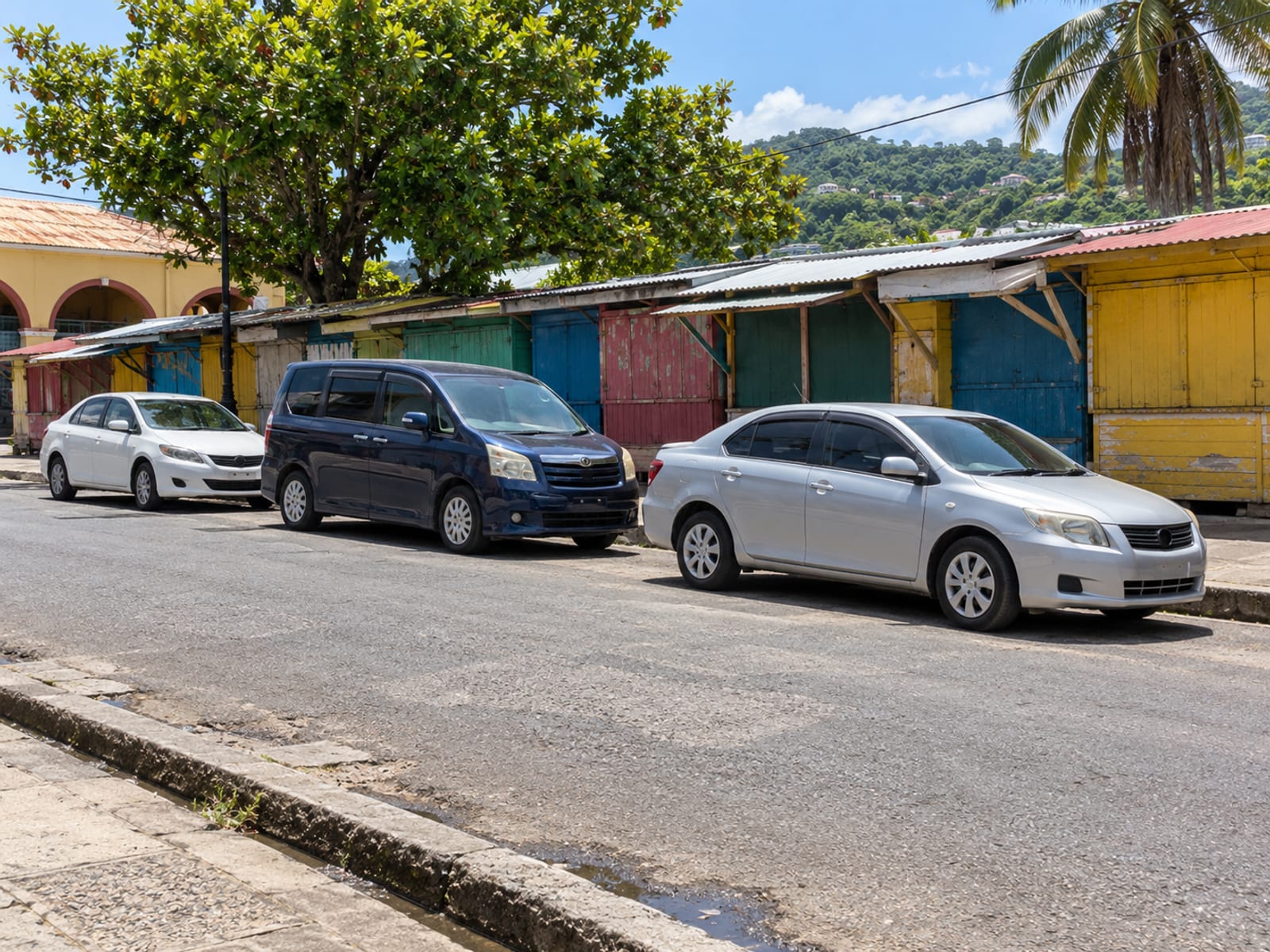
Stand where a vehicle can stop safely and signal the driver. State your destination before boarding, especially if several routes leave from the same area. The route origin and destination printed on the doors can help you identify the correct vehicle, but local boarding points may differ by town and route.
The Transport Authority’s available routes database identifies licensed origins and destinations by parish. Use the nearest recognised town, transport centre or landmark when asking where to board. For example, a route may be listed between two towns while passengers use a transport centre or a known stopping point within those towns.
If your trip begins near Half Way Tree, you can see transport operators serving the area on the Kingston transport operators page. A trip between Eltham Park and Spanish Town involves Kingston and St. Catherine, so the St. Catherine transport operators page may also help when arranging the connecting part of the trip.
What to expect inside the vehicle
Route taxis are shared vehicles. Other passengers may already be inside, and more passengers may board along the route. You are paying a separate passenger fare, not hiring the whole vehicle.
Tell the driver where you want to get off before reaching your destination. If you do not know the local landmark, ask the driver or conductor to indicate the stop. Keep your luggage close and ask if there is room before boarding. A large suitcase, several bags or a folded mobility aid may not fit in the same way as a small personal bag.
A longer cross-parish trip may require a change where one route ends and another begins. For example, you may need one vehicle to reach a town or transport centre, then another vehicle for the next section. Allow time to identify the next route and carry your bags between vehicles.
A route taxi does not reserve a departure time for you. Vehicles leave as passengers and route conditions allow. If you need a fixed airport pickup, a private hotel transfer or a direct trip with no shared stops, arrange a charter or transfer with the operator or airport taxi desk instead.
For airport options, see Airport Transfer or Taxi in Jamaica: Which One Fits Your Trip. At Sangster International Airport, use the taxi desk outside Customs for the airport taxi services listed by MBJ Airports Limited.
Route taxi fares and payment
The Transport Authority sets and publishes approved route taxi fares. Route taxi fares use a base fare plus a distance rate, and route-specific fares are rounded. The Road Traffic Act requires a route taxi to carry a fare table available for inspection.
On June 2, 2026, the Government announced a two-stage Public Passenger Vehicle fare adjustment. For July 2026, the published route taxi rates were:
The J$240 and J$190 examples are passenger route fares for the named directions, not private-vehicle prices. All fares are in Jamaican dollars. Carry Jamaican cash and ask for the exact fare and accepted payment method before entering.
Ask about any additional charge for luggage, waiting time or a special stop before travel, especially if you are carrying large bags or need to leave the vehicle away from a normal stopping point.
The Jamaica Taxi Fares 2026: Route Taxi and Bus Fares Explained page gives more detail on regulated passenger fares and the difference between shared fares and private prices.
Choosing between a route taxi and a private service
A route taxi works well for a local trip when your starting point and destination sit along the same approved route. It can be practical for everyday commuting, town-to-town travel and short connections from a transport centre. You need to accept shared seating, roadside stops and a departure time based on vehicle availability.
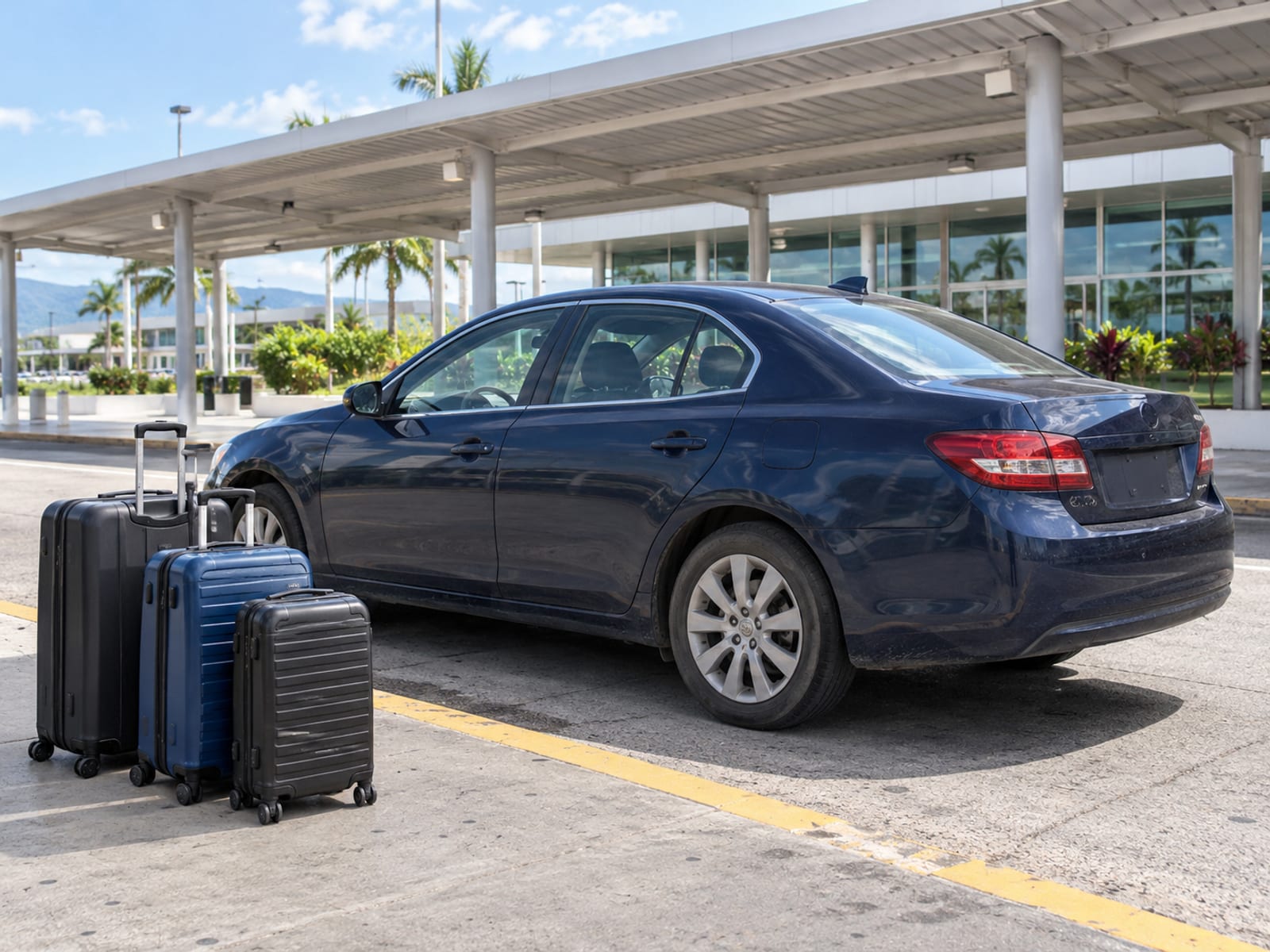
A private charter suits a group travelling together under one arrangement. You can give the operator an exact hotel name, street address, airport terminal or attraction, then arrange the vehicle type and pickup time. The price is normally discussed for the vehicle or service, not as a separate passenger fare on a public route.
A bus or coach can suit a longer scheduled trip when you prefer a designated depot and a published departure. A rental car gives you control over stops and luggage, but you arrange the vehicle, documents, fuel and driving yourself. Read Driving in Jamaica as a Visitor: Licences, Roads and Rules before choosing that option.
When comparing prices, keep the services separate. A route taxi fare is a regulated passenger fare for an approved route. A private transfer is arranged for a vehicle and destination. A coach fare applies to the coach operator’s scheduled service. These prices cannot be treated as the same type of cost.
What to arrange before a private transfer
Before paying for a private taxi or airport transfer, provide the operator with:
- Your flight number and arrival time.
- The number of passengers.
- The number, size and type of bags.
- Any child-seat requirement.
- The exact hotel name, street address or other destination.
- The total price and currency.
- Whether the price is per vehicle or per person.
- Whether waiting time is included.
- What happens if the flight is late.
- The meeting point and driver identification.
- The payment method and payment timing.
JUTA’s published booking information recommends booking at least 24 hours in advance. It describes private transfers rather than shared shuttles, asks passengers to specify child or baby seats and asks travellers to call its assistance number if a flight delay may affect the transfer.
Ask the operator for the total price to your exact destination, including any waiting or luggage charge. For an airport pickup, give the terminal, airline and flight number, then arrange the meeting point and the identification you will use to recognise the driver.
Families can ask:
- How many passengers and bags fit in one vehicle?
- Is the vehicle private or shared?
- Is the price per vehicle or per person?
- Is a larger van or more than one vehicle needed?
- Is the child seat suitable for the child’s age and size?
- Is the child seat included in the quoted price?
JUTA says child or baby seats can be requested when booking, but availability may be limited during peak periods. Jamaica’s 2023 government statement on child restraints says taxis and buses follow different public-transport rules from private vehicles and states that children under one year must be held by an adult in public passenger cars or buses.
Travellers using wheelchairs or mobility aids should ask:
- Can the vehicle take the wheelchair without folding it?
- Is there a lift or ramp?
- Can the passenger remain seated in the wheelchair during travel?
- How many passengers and bags fit with the wheelchair?
- Is the quoted price per vehicle?
- Are accessibility or luggage charges included?
- Where exactly will boarding take place?
Jamaica Wheelchair Taxi publishes vehicles with wheelchair lifts and capacities including airport-transfer vehicles for passengers, wheelchairs and luggage. Its published capacities include vans carrying up to four people plus one wheelchair passenger and luggage, as well as larger vehicles for groups and multiple wheelchairs.
For operators serving the north coast, the St. Ann transport operators page includes services for the Ocho Rios and St. Ann’s Bay area. For Montego Bay and Sangster International Airport arrangements, see the St. James transport operators page.
For any travel affected by Hurricane Melissa, check current Transport Authority, airport and operator notices on the day you travel, then ask the operator whether the road, pickup point or service has changed.
Finding routes across Jamaica
Jamaica’s route taxi network consists of many local origin-to-destination routes rather than one island-wide service. The Transport Authority list includes route taxis and rural stage carriages, organised by parish.
Examples include:
- Kingston and St. Andrew routes between Chisholm Avenue, Downtown, Half Way Tree, Papine, New Kingston, Cross Roads and Barbican.
- St. Catherine routes between Greater Portmore, Spanish Town, Old Harbour, Linstead, Bog Walk and Above Rocks.
- St. James routes serving Sangster International Airport, Montego Bay, Rose Hall, Ironshore and nearby communities.
- Trelawny routes connecting areas such as Lilliput, Martha Brae, Sherwood Content, Wakefield and Falmouth.
- St. Ann routes serving Ocho Rios, St. Ann’s Bay, Brown’s Town and surrounding communities.
- St. Mary routes connecting Port Maria, Annotto Bay, Oracabessa and areas toward Port Antonio.
- Portland routes serving Port Antonio, Long Bay, Manchioneal, Moore Town and surrounding communities.
- St. Thomas routes serving Morant Bay, Yallahs, Port Morant and nearby communities.
- St. Elizabeth and Westmoreland routes serving Junction, Santa Cruz, Black River, White House, Savanna-la-Mar and Negril.
- Hanover routes serving Lucea, Hopewell, Green Island, Negril and nearby communities.
- Clarendon, Manchester and other parish routes connecting towns, districts and transport centres.
Search the Transport Authority route database using your exact town, community, origin and destination. Then ask locally for the recognised boarding stand or stopping point and the fare for your direction of travel.
Common questions
How do route taxis work in Jamaica?
A route taxi is a shared taxi that holds a Transport Authority licence and has a designated origin-to-destination route. You board at a recognised stand, transport centre, bus park or permitted roadside point, state your destination, pay a separate passenger fare and get off at an agreed stop along the route.
How much is a route taxi in Jamaica?
For July 2026, the published rate was J$132 as a base fare plus J$8.64 per kilometre. Examples were J$240 per passenger from St. Ann’s Bay to Ocho Rios and J$190 per passenger from Eltham Park to Spanish Town. The exact fare depends on the approved route and direction.
How do I know a taxi holds a Transport Authority licence in Jamaica?
A route taxi should have red PPV plates, “Route Taxi” on the doors, the route origin and destination printed on the front doors, a yellow taxi globe, black-and-white horizontal checks, Transport Authority driver identification and the required windshield documentation. Check these markings before boarding.
Can tourists use route taxis in Jamaica?
Yes, as long as the vehicle carries the required markings. Look for the Transport Authority plates, route markings, driver identification and licence documents. The Transport Authority distinguishes these vehicles from illegally operated “robot” taxis, and the U.S. Department of State advises travellers to use taxicabs with red and white licence plates or recommended transport services.
What are the taxi routes in Jamaica?
Routes are local and parish-based, linking recognised towns, communities and transport centres. Use the Transport Authority’s available-routes database for the exact origin and destination, then ask locally where that route boards and where you should get off.
To find transport operators where you are travelling, start from the parish directory.